
Two CPOs face the same call.
A strategic bet that takes the next two quarters. Real money. Real risk. No clean proof it works.
Both have conviction. Both got this bet approved.
One CPO gets called decisive. The board agrees to do it.
The other is fired within the year.
Same decision. Same conviction. Opposite outcomes.
We explain that gap with talent.
She read the market better. He moved too slow. She had the room; he lost it.
It's not talent.
It's not instinct either.
The difference was the capital structure standing behind each of them.
We treat product judgment as a personal asset.
Something you build over a career. Something you carry from company to company in your own head.
It isn't.
The same bet that signals vision at one company signals recklessness at another — and the thing that flips the meaning isn't the bet. It's the cap table reading it.
Look at what the cap table actually sets.
It sets the time horizon.
A venture-backed company is funding big, risky bets. Burn is tolerated. The board wants the one that could 10x the next round. A two-quarter gamble there reads as ambition.
A PE-backed company is inside an exit window. Eighteen to thirty-six months to the sale. Every dollar is measured against multiple at exit. That same two-quarter gamble reads as a threat to the number the firm already promised its Limited Partners (LPs).
Same bet. One board calls it leadership. The other calls it a liability.
It sets the definition of a good decision.
In a founder-led company, the founder's own capital intuition is the real strategy — and when your suggestion diverges from his, you don't have a strategy disagreement. You have a power problem.
In a public company, the next earning calls report is the power. A bet that dents this quarter to win the next two years is correct on the merits and unfundable in the room.
The merits barely move. The structure decides.
A version of this I watched up close.
A product leader joins a PE-backed software company near the end of its hold period. Strong operator. Real conviction.
She wants to rebuild the platform. Three quarters of work. Feature velocity slows while it happens.
At her last company — venture-backed, Series B — that exact move made her name. The board approved it. The platform rebuild lasted the next two rounds.
Here, the same proposal dies in one meeting.
She reads it as politics. The new board doesn't understand product. The CRO blocked her.
It wasn't politics.
It was the clock.
A firm twenty months from a sale prices every quarter of slowed growth against the multiple it already pitched to its buyers. Her platform rebuild initiative was the right call for the product and the wrong call for the exit she walked into.
Nobody told her that. Nobody had to.
The cap table makes the argument without ever speaking.
So learn to see it before you pitch.
Reading the capital structure isn't reading the org chart. It's a different set of questions, and most product leaders never ask them.
Who sits on the board, and when did their fund invest?
A fund three years into a ten-year vehicle has patience. The same firm in year eight is hunting liquidity. Same logo on the board. Opposite appetite.
What did the last round price at?
A flat round or a down round rewrites every risk conversation in the building. Bets that were fundable at the old valuation become unspeakable at the new one.
Is the company funded for growth, or funded for margin?
Venture burn forgives a long bet. Profitable enterprise discipline does not. The money has a temperament — and it tells you what kind of decision will survive contact with the board.
Does the founder still control the vote?
If he does, the cap table has a personality, not just a math. Your read has to survive his capital intuition, not just the spreadsheet.
None of this is on the roadmap. All of it decides the roadmap.
This is why the playbook stops working.
You spend years at one kind of company. You learn what gets approved, what gets killed, how to frame a bet so the room says yes.
You internalize it as judgment.
Then you change companies — and the same moves that made you sharp start making you wrong.
You think you lost your edge.
You didn't.
You changed cap tables and kept running the old playbook.
And nobody warns you, because the mismatch is invisible.
No board says "your judgment doesn't fit our exit timeline." They say the bet is too risky. They say the timing is off. They say let's revisit next quarter.
You hear feedback about the decision.
The real message is about the structure.
So you adjust the deck. You sharpen the case. You bring more data to the next one.
None of it lands — because the case was never the problem.
A year of strong work reads as a year of bad calls. Then the conversation isn't about a bet anymore. It's about whether you're the right CPO at all.
That's how good leaders get managed out of companies they could have won at. Not on talent. On a structure they never learned to read.
The leaders who survive the transition aren't smarter than the ones who don't.
They do one thing first.
Before they pitch a single bet, they read the capital structure they just walked into. Who funded this. On what timeline. Against what exit. What the board is actually optimizing — growth, margin, multiple, or the founder's gut.
Then they calibrate the bet to that.
Not the textbook. The cap table.
So the shift is small to say and hard to live:
From — "I have good product judgment."
To — "I can read the capital structure I'm operating inside, and calibrate to it."
The first sentence travels with you and lies to you.
The second one you have to rebuild every time the funding changes.
Here's the question worth sitting with this week:
Your last big product bet — the one that got approved, or quietly killed. Do you actually know what decided it? The strength of your case? Or the exit math nobody named out loud?
If you can't answer that, you're not reading the structure.
You're hoping it agrees with you.
A question to think about:
💬 When your last big bet got approved or killed — what actually moved the room: the strength of the case, where you were in the funding cycle, or who at the table had the most to lose? Pick the one that really decided it.
Hit reply and tell me — I love hearing your thoughts.
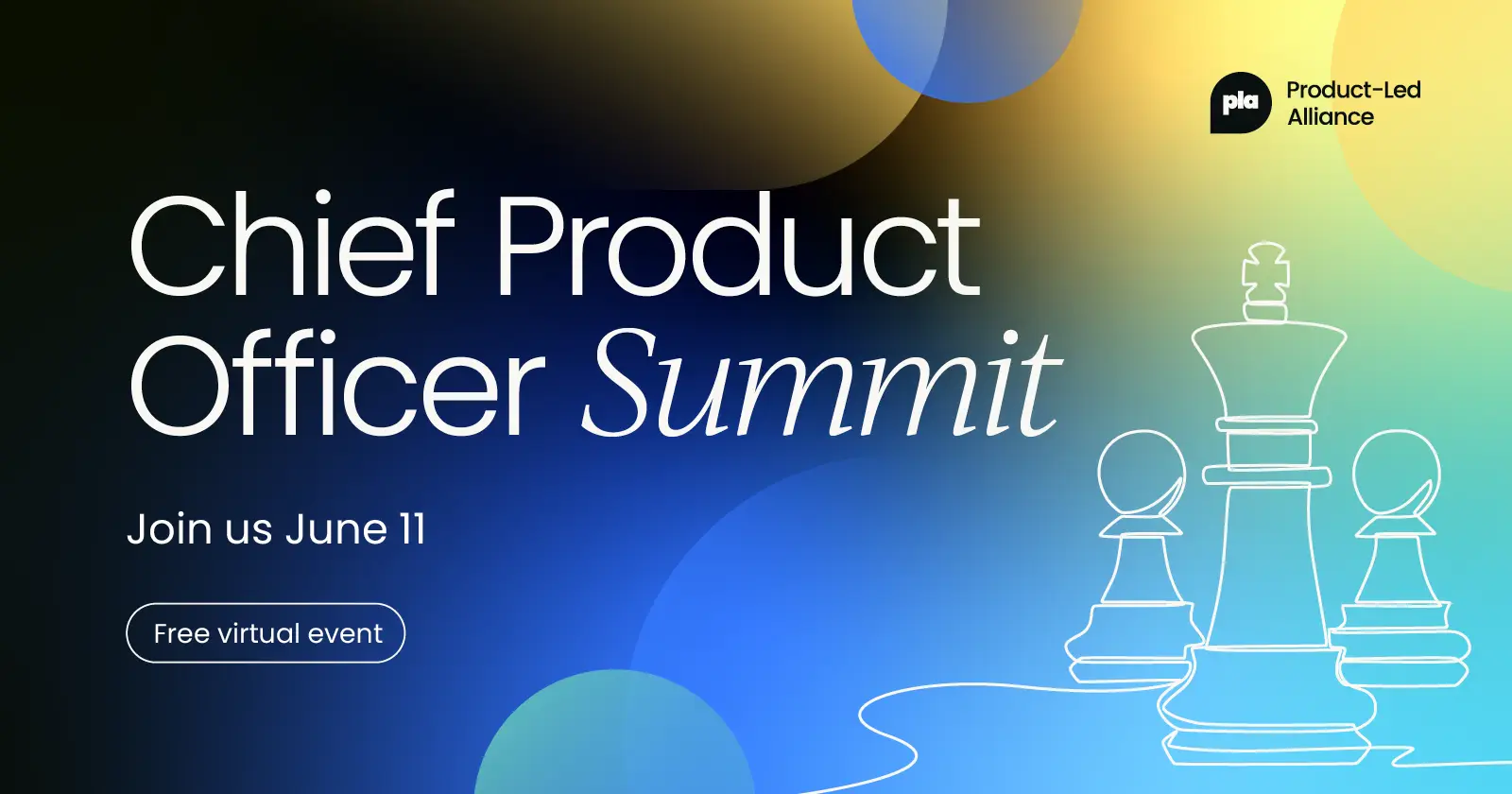
I'm going to dive deeper on this topic this Thursday, June 11th. And I would love to see you there, it will be your opportunity to ask me questions and learn more on this topic.
I'm opening the Chief Product Officer Summit — my session, "Your Judgment Isn't Yours. It's Your Cap Table's," kicks off the day at 9:15am ET June 11th.
It's virtual, and it's free. If your hardest product calls keep getting decided by something you can't quite name, this is the session that names it.
Grab a free pass here: virtual.productledalliance.com/location/cpo
Until next week,
Elena Leonova
Executive product & business-strategy leader
Product Leadership Unlocked — how real product decisions get made. A weekly newsletter for senior product leaders.
Was this forwarded to you? Subscribe here.
When you're ready: I coach product leaders into executive scope through my Maven cohort, and advise software companies on product strategy directly. Reply to this email or find me at elenleonova.com.